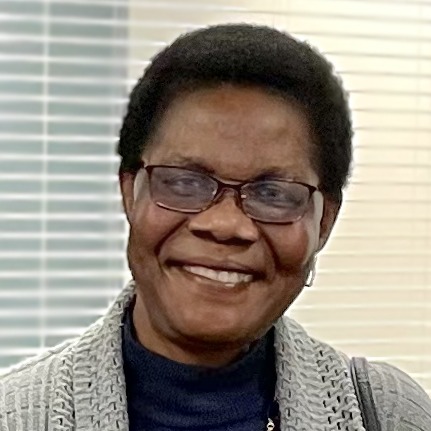
 I’m now working on a book with my Ugandan colleague Rev. Dr. Milly Erema Maturu and I realized that I was making a mistake with her name that I needed to correct.
In older articles, I used to refer to her as Dr. Erema, but now I realize that she really should be referred to as Dr. Maturu instead. (I’m now correcting all these articles on my website.)
What is going on here? I’m guessing you will find it quite interesting.
Unlike Westerners, Ugandans have only one name, just like people did back in biblical times. They have no name that describes their family, only a single personal name.1 Even though Ugandans only have one name, these names are distinctive to each tribe so that any other Ugandan knows what group they are from by just hearing their name.
When missionaries came to Uganda, they had all new Christians take a baptismal or “Christian” name. The Anglican missionaries who came to her area from England had people take English names, whether or not they were biblical.2 Milly’s Christian name is Milly, but her actual, personal Ugandan name is Maturu.
Milly’s husband’s Ugandan name is Erema (eh-REHM-ah) and his Christian name is Samuel. In Uganda, women do not take their husband’s name. Because of Western influence, her husband’s Ugandan name is included at the end on legal documents, even though it is not used as a family name. Milly signs her name “Maturu Milly Erema” in Uganda, but at Uganda Christian University, her students and other faculty call her “Dr. Maturu” not “Dr. Erema.” None of her children use “Erema” in their name at all.
This confuses Westerners, so I suggested that we use “Milly Erema Maturu” to refer to her on our writing. The name Erema is still there, but it is a middle name so not as important. Informally, she goes by Milly, but if you want to be respectful, Dr. Maturu. So from now on you will see her as Rev. Dr. Milly Erema Maturu on her books and writing with me.
~~~~~
1 Europeans only started adopting family names around 1100 AD. Different governments began enacting laws to require them over time. It wasn’t till the 1800’s that Norwegians began to adopt last names, which came from the name of the farm or place they lived on. Still today, the farm named “Tverberg” in Norway is known by the residents of Voss, where my paternal grandfather came from.
2 Ugandans felt like being asked to adopt English names at baptism was a way of cutting them off from their heritage. Indeed, missionaries wanted to make sure that new converts didn’t have names of idolatrous gods. Names of Christian saints were chosen to inspire the recipients to imitate them in godliness.
Just to note, the tradition of adopting a new name at baptism is actually quite ancient (~200-300 AD) and widespread in both Jewish and Christian tradition, and long predates missionaries. It is ultimately an attempt to imitate the practice we see in the Bible of God giving a person a new name to denote a new and holy calling, as with Abram/Abraham, Sarai/Sarah, Jacob/Israel, Simon/Peter and others.
Leave a Reply