Why didn’t the Bible outlaw slavery?
Like war and famine, slavery was a human horror that afflicted cultures throughout all of history. God knew the sinfulness of the human heart, and allowed it, just as he allowed divorce (Matt. 19:8). Making a single law to outlaw slavery was about as reasonable as decreeing that humans sprout wings and fly. Instead, God dealt with it in a more comprehensive, long-term way.

If you look closely at the biblical story, you can see that slavery is on God’s mind from the very beginning, and it will strongly shape the history and laws of his people Israel.
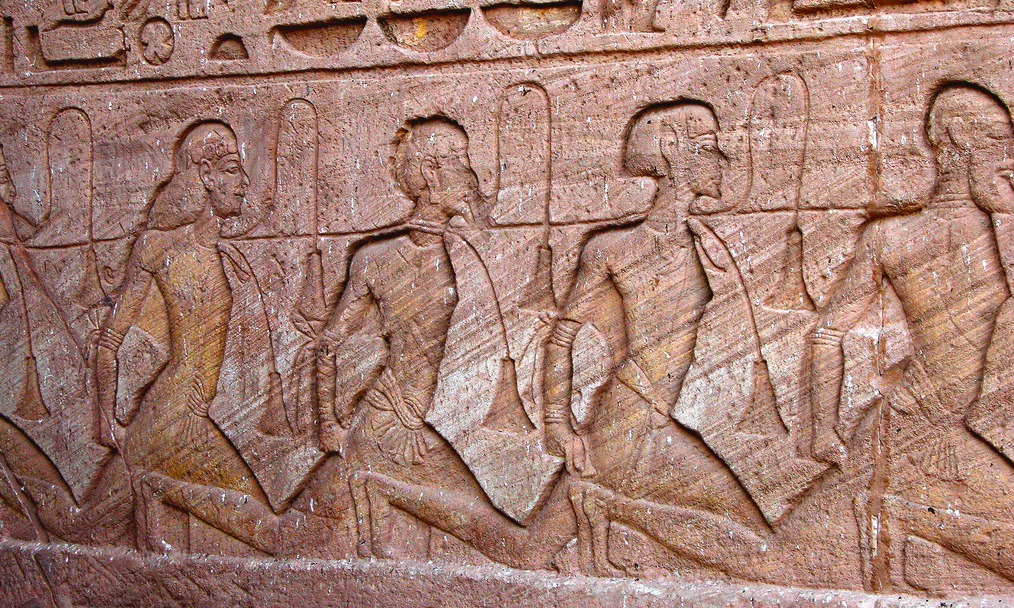
One of the very first things God tells Abraham when he enacts the covenant in Genesis 15 is that his future family would be enslaved for 400 years, but that he would redeem them. Isn’t it remarkable that the people who God would use to redeem the world, had to begin its existence in slavery?
Later, in Exodus 12, when the story of Israel’s miraculous liberation from Egypt is told, the command is given to celebrate the nation’s joyous release every year. This would become a formational memory for them. If you’ve ever participated in a Passover, you’ve tasted the tears that slaves have shed in bondage as they’ve longed for freedom.
Sabbath is to Release One’s Slaves
If that were not enough, God gives the command for observing the Sabbath every week. You might think that the purpose of the Sabbath is for worship. But surprisingly, the Torah actually says that it is for Israel to release its slaves for a day to commemorate their own enslavement, and how God had miraculously set them free.
The seventh day is a Sabbath to the LORD your God. On it you shall not do any work, you or your son or your daughter or your male servant or your female servant, … that your male servant and your female servant may rest as well as you. You shall remember that you were a slave in the land of Egypt, and the LORD your God brought you out from there with a mighty hand and an outstretched arm. Deuteronomy 5:14-15 1
 The Israelites were to allow their slaves to rest to remember that they were in bondage once too. This is one of many laws in the Torah that were based on the empathy they gained from their suffering in Egypt.
God knew that he couldn’t just write a single law to outlaw slavery, so he enslaved the whole people of Israel to give them empathy for those in bondage.
Laws that Regulate Slavery
Then, the very first section of laws after the Ten Commandments in Exodus 21 are those regulating slavery. Immediately the Torah begins by mitigating the evils of slavery in a world that didn’t know how to live without it. No other law code begins this way. Jewish scholar Nahum Sarna notes, “The priority given to this subject by the Torah doubtless has a historical explanation: Having recently experienced liberation from bondage, the Israelite is enjoined to be especially sensitive to the condition of the slave.” 2
At Mount Sinai, the Israelites would have been overjoyed by hearing commands like:
When a man strikes the eye of his slave, male or female, and destroys it, he shall let the slave go free because of his eye. If he knocks out the tooth of his slave, male or female, he shall let the slave go free because of his tooth. (Exodus 21:26-27)
Sarna comments, “This law—the protection of slaves from maltreatment by their masters—is found nowhere else in the entire existing corpus of ancient Near Eastern legislation.” In fact, the difference between the laws of the Torah and those of surrounding nations was stark. In the code of Hammurabi, the penalty for helping a slave escape was death. (Unfortunately, this was true in American South too.)
#16 “If a man should harbor a fugitive slave or slave woman, of either the palace or of a commoner, in his house and not bring him out at the herald’s proclamation, that householder shall be killed.”
#19 “If he should detain that slave in his own house and afterward the slave is discovered in his possession, that man shall be killed.”
In contrast, in Israel the law said,
You shall not turn over to his masters a slave who seeks refuge with you from his masters. He shall live with you, in your midst, in any place that he chooses in one of your settlements, wherever he pleases. You must not afflict him. (Deuteronomy 23:16-17).
Jeremiah Unterman comments in his book, Justice for All: How the Jewish Bible Revolutionized Ethics:
This law has within it the potential of the abolishment of slavery, for all the slave in Israel has to do to become free is to run away! Thus the implication of the law is that slavery becomes an issue of freedom of choice. That may not have been the intention of the law, but the implication is there nonetheless. It is not a coincidence that these verses would later be prominently used by abolitionists in fighting slavery in America in the nineteenth century. 3
Slavery was Universal in the Ancient World
Slavery was a horrifying reality that goes back to the beginning of human history. It wasn’t confined to Bible and the American South. Europeans enslaved other Caucasian peoples before they began using Africa as a source. My own Viking ancestors may have traded in them. 4
Below is an extended quote from the Black economic historian Thomas Sowell about the worldwide history of slavery. You may be quite surprised at the reason for its demise:
While slavery was common to all civilizations, as well as to peoples considered uncivilized, only one civilization developed a moral revulsion against it, very late in its history—Western civilization.
Today it seems so obvious that, as Abraham Lincoln said, “If slavery is not wrong, nothing is wrong.” But the hard fact is that, for thousands of years, slavery was simply not an issue, even among the great religious thinkers or moral philosophers of civilizations around the world. “There is no evidence,” according to a scholarly study, “that slavery came under serious attack in any part of the world before the eighteenth century.”
Themselves the leading slave traders of the eighteenth century, Europeans nevertheless became, in the nineteenth century, the destroyers of slavery around the world—not just in European societies, but in non-European societies as well, over the bitter opposition of Africans, Arabs, Asians, and others. Moreover, within Western civilization, the principal impetus for the abolition of slavery came first from very conservative religious activists—people who would today be called “the religious right.”
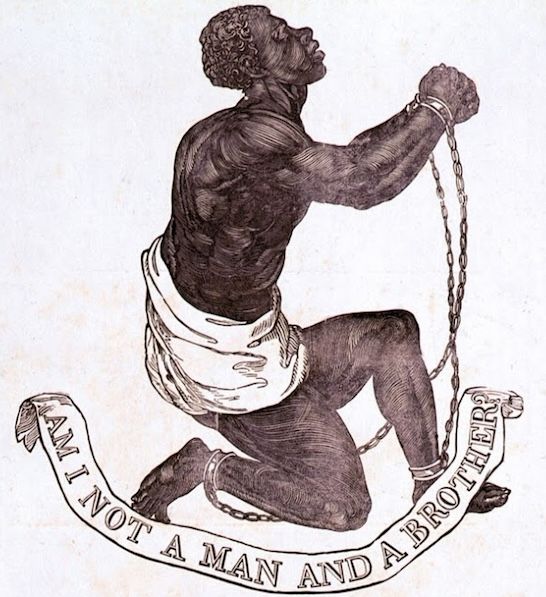
What was historically unusual was the emergence in the late eighteenth century of a strong moral sense that slavery was so wrong that Christians could not in good conscience enslave anyone or countenance the continuation of this institution among themselves or others.
Nor was this view confined to religious leaders or congregations. Secular intellectuals like Adam Smith in Britain and Montesquieu in France wrote against slavery in the eighteenth century too.
Slavery did not die out quietly of its own accord. It went down fighting to the bitter end—and it lost only because Europeans had gunpowder weapons first. The advance of European imperialism around the world marked the retreat of the slave trade and then of slavery itself. The British stamped out slavery, not only throughout the British Empire, but also by its pressures and its actions against other nations.
For example, the British navy entered Brazilian waters in 1849 and destroyed Brazilian ships that had been used in the slave trade. The British government pressured the Ottoman Empire into banning the African slave trade and, later, threatened to start boarding Ottoman ships in the Mediterranean if that empire did not do a better job of policing the ban.
Still later, Americans stamped out slavery in the Philippines, the Dutch stamped it out in Indonesia, the Russians in Central Asia, the French in their West African and Caribbean colonies. Germans, in their East Africa colonies, often hanged slave traders on the spot when they caught them in the act.
This worldwide struggle went on for more than a century because the non-Western world in general resisted and evaded all efforts to get them to root out this institution that was an integral part of their economies and societies.5
My goal in sharing this piece from Thomas Sowell is to show the enormous irony that modern readers are scandalized by the fact that slavery is in the Bible, and some even accuse Christianity of spreading it. Just the opposite! It was actually because of Christian influence that this scourge was brought to an end.
From the very beginning of God’s covenant with Abraham, God’s intention was to impress the horrors of slavery on the nation who would be his representatives on earth. Then he gave them many laws for mitigating it and undermining it. Ultimately these ideas paved the way for Christians to act on the teachings of Christ, and bring slavery to an end within the Western world.6
~~~~~
1 The Torah has some surprising things to say about slavery. You might think that Israel would be commanded to be at war with Egypt forever for enslaving them. Surprisingly, however, it says, “You shall not abhor an Egyptian, because you were a sojourner in his land.” (Deuteronomy 23:7)
On the other hand, God told the Israelites to ask the Egyptians for silver and gold jewelry and clothing before they left Egypt, by which he compensated them for centuries of servitude. (Exodus 12:35)
2 Nahum Sarna, The JPS Torah Commentary – Exodus, (New York: Jewish Publication Society, 1991), p 118.
3 Jeremiah Untermann, Justice for All: How the Jewish Bible Revolutionized Ethics, (Lincoln, NE: U Nebraska Press, 2017) p 63.
4 Neil Price, “The Little-Known Role of Slavery in Viking Society,” Smithsonian Magazine – at this link. The word “slave” comes from the fact that Slavic peoples (from Central and Eastern Europe) were often the source, because they were less able to defend themselves against raiders.
5 Thomas Sowell discusses these issues and the battle to end slavery in American South in “The Real History of Slavery” in Black Rednecks and White Liberals (New York: Encounter Books, 2005) p 111-169. You can read this outstanding chapter at this link.
6 Of course it should also be noted that many Christians enslaved others and used their Bibles to defend the practice. And also that slavery still exists today, despite being outlawed by governments worldwide.
Photos: Andy Gavin, Dennis Jarvis, Wikipedia
Mark Allen says
Thank you !! This brought together in one article crucial elements in and out of scripture. I have shared it straight away. I love Thomas Sowell and his clear critically-minded work getting to the heart of a matter however inconvenient at times to modern “trends”….and presenting data…also touched base with Lecraes journey…
Thank you for your efforts !!
Mark Allen
William Howbert says
good to read the torah attitude to slavery
Barbara Hyland says
Good article. There are forms of slavery today . Of course that’s a Psychological issue. The Messiah came to set the “captives” free. His obedience to Torah freed us from our what we were unable to do for ourselves. Who can love God perfectly? Who is can love his brother as himself? We are unable. Even dying for another will not satisfy the Law. God in his mercy sent One who could free us from our ownselves!