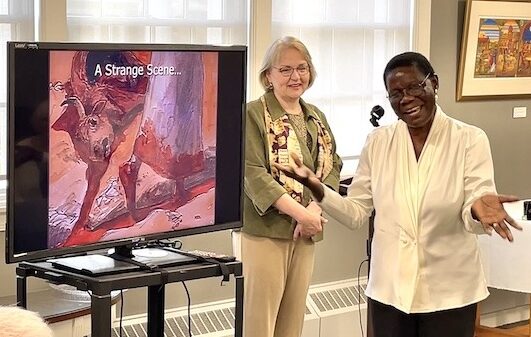
If you’ve been reading my newsletters and articles in the past few years, you know that I’ve become friends with an Old Testament professor from Uganda, Rev. Dr. Milly Erema Maturu. We are now working on a book for Zondervan that is tentatively titled, Reading the Bible as an Insider.
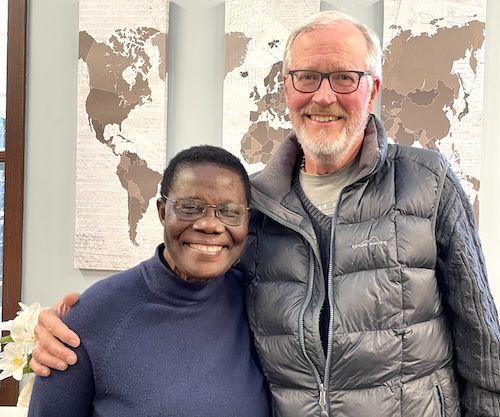
The title comes from the fact that when Dr. Maturu attended seminary in my town in western Michigan in 2000-2001, her Old Testament professor, Dr. Tom Boogaart, was astounded by her cultural knowledge about the Bible. When he was lecturing about the strange scene where animals were cut in half for God’s covenant with Abram in Genesis 15, Milly commented that she had seen her grandfather perform this ceremony herself! From her real-life experience she gently corrected his textbook knowledge and added details to his explanation of the ritual’s meaning.
This happened throughout the semester, and Dr. Boogaart began to ask her to share her experiences with the class about various texts they were studying. He has since remarked to her, “Milly, it’s like you read the Bible as an insider!”
Milly grew up among the Lugbara people, a tribal group in northern Uganda, Sudan and the Congo. She and her husband are both Christians and even Anglican priests, but they are well-connected to the tribal traditions of their people, which seem like they’ve barely changed from life in the Ancient Near East. Along with this, she has a Ph.D. from Asbury Seminary and she taught Old Testament and other Bible classes at Uganda Christian University for over 20 years. So she has a unique ability to comment on some of the most unusual and difficult biblical texts.
Even scholars are interested in her thoughts. In recent years, Dr. Maturu has spoken at the scholarly meetings of the Institute for Biblical Research, the Evangelical Theological Society and the Society for Biblical Literature. She’s given presentations on Zipporah, Sarah and Hagar, Psalm 82, and Psalm 55, all from an African cultural perspective.
Imagine living in the Biblical world…
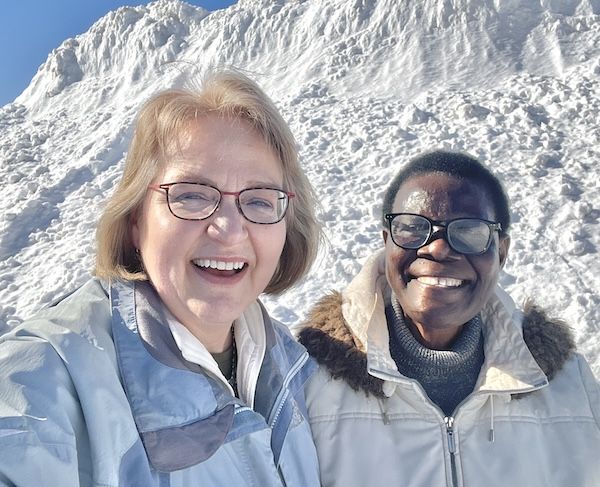 Dr. Maturu and I spent a couple months together this past winter working intensely on this project, and I was amazed at all of the ways that she describes a society that is seemingly straight out of the biblical world. I opened my Bible and started counting the passages. Here are just a few:
Gen. 4:19 Lamech took two wives. The name of the one was Adah, and the name of the other Zillah.
Polygamy is still practiced widely among the Lugbara people, although as Christians Milly’s family does not take part. Her husband’s father had three wives, so she knows polygamous family life well – after all, she’s had three mothers-in-law!
Genesis 11:3 The inhabitants of Babel said, “Come, let us make bricks, and burn them thoroughly.” And they had brick for stone, and bitumen for mortar.”
Milly’s people still burn mudbricks for building – I wrote about how they did this at the secondary school she heads.
Genesis 16:1 Now Sarai, Abram’s wife, had borne him no children. She had an Egyptian maidservant whose name was Hagar.
Milly has had maidservants, and in fact was a maidservant herself as teen. She reads the passage about Hagar very differently than Westerners do.
Ruth 2:17 So Ruth gleaned in the field until evening. Then she beat out what she had gleaned, and it was about an ephah of barley.
Gleaning is still a normal part of life in Uganda where many live as subsistence farmers. Widows, children and others are allowed to glean after each harvest to supply food for their tables.
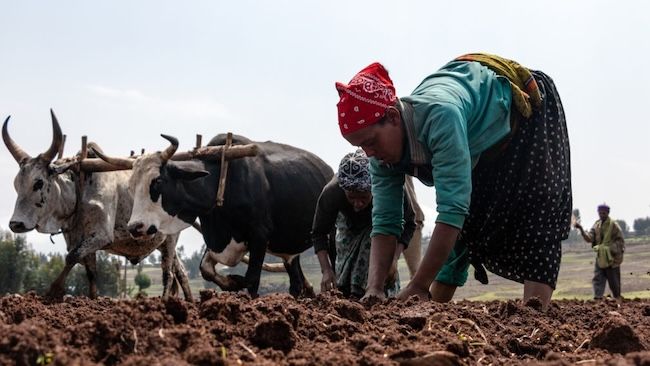
Luke 8:43 There was a woman who had had a discharge of blood for twelve years, and though she had spent all her living on physicians, she could not be healed by anyone.
Menstrual uncleanliness is still strongly felt by many traditional African women, who sleep separately from their husbands and do not cook during this time.
Luke 20:28 They asked him a question, saying, “Teacher, Moses wrote for us that if a man’s brother dies, having a wife but no children, the man must take the widow and raise up offspring for his brother.
Levirate marriage, or the “duty of the brother-in-law,” is still practiced among the Lugbara. If a man dies, his brother is expected to take his wife as his own if she has not yet had a son to provide for her. Even the man’s father may take her as wife if needed, which sheds light on Judah and Tamar’s story.
Luke 17:12 As Jesus entered a village, he was met by ten lepers, who stood at a distance and lifted up their voices, saying, “Jesus, Master, have mercy on us!
Not now but in past decades, people with leprosy were put out of communities and lived as lepers did in the Bible.
1 Corinthians 15:20 Christ has been raised from the dead, the firstfruits of those who have fallen asleep.
Milly’s traditionalist mother-in-law was very careful about setting aside the firstfruits of the harvest for God and the family’s ancestors.
Hebrews 5:1 For every high priest chosen from among men is appointed to act on behalf of men in relation to God, to offer gifts and sacrifices for sins.
Milly’s grandparents made sacrifices including sin offerings and fellowship offerings before they became Christians. The missionaries who taught them insisted all practices like this must end.
~~~
This list only scratches the surface of the Bible passages that Milly shared interesting thoughts about from her traditional upbringing. She’s a walking Bible commentary! You can imagine that there are many things we could discuss in our book. What we are planning to focus on are passages that Milly’s people read differently than Westerners that answer some of our nagging questions with Scripture.
Please pray for us as we work together over the coming months on our book. It is expected out in the fall of 2027.
If you want a preview of what we’re writing about, here are few articles I’ve shared before.
The Problem of Psalms of Cursing
An East to West Misunderstanding: What “Our Children” Means
Levirate Marriage from an African Perspective
Was the Law of the Rebellious Son Actually Progressive?
Learning to Read my Bible through Ancient Eyes – Rain and Sacrifice
Oh the Joy of Being a Refuge from Gale Storms
Or you can watch a video of a presentation we did on zoom some time ago.
Cindy Sims says
I am so looking forward to your book!
Suzanne Parker says
When can I order it. Soon I hope
Darcy BLANKENHORN says
I can hardly wait!!
David Mohundro says
This is exciting, I look forward to reading it!
Beth says
Wow! I’m excited! I want to order this book as soon as possible!!
Penelope Gomez says
Can’t wait!!! Agghh I love you guys. May God bless you sisters.
Travis Goines says
I want a copy of the book.
Lois Tverberg says
🙂 We’re still working on it! (I’m the reason for the delay.)