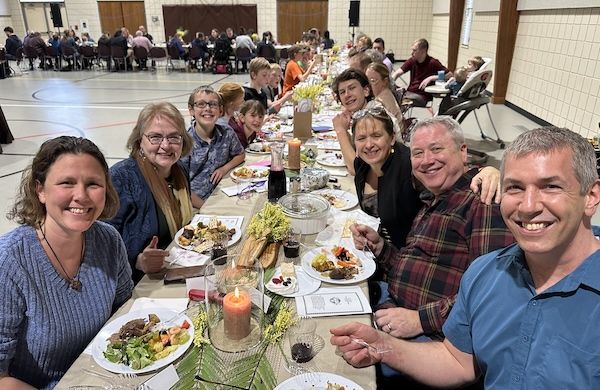
Last week I went to a Passover dinner at a Baptist church in western Michigan. They opened this potluck to all the families who wanted to join them, and over 130 people attended. They asked everyone to bring a dish that was without leaven and somewhat kosher – no pork and no mixing of milk and meat.
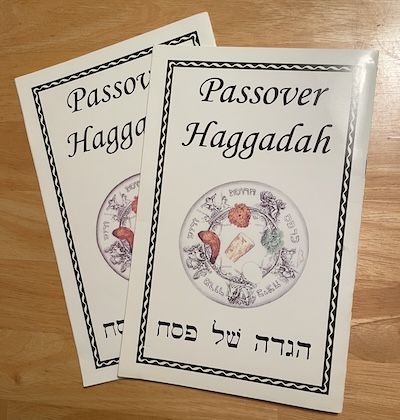 I had a happy surprise when I saw that the Passover Haggadah they were using was a booklet that I had made over 20 years ago when my ministry was actively teaching about the biblical feasts in our area. I had known their former pastor and they were still using our materials.
It was encouraging to see that this church had persisted in celebrating Passover, at least in the most recent years. Many churches in our area were fascinated with the Bible in context in the early 2000’s, but plenty of pastors who were once enthusiastic have largely left behind what they learned. Sigh.
Even if it’s still on their minds, their congregations are often plagued with an attitude of “Passover? Did it all ready.” Many people attend a Passover once and then don’t want to come again. To them it’s a cultural background lecture that doesn’t mean much. They say, “Great – got it! I’ve learned it all.” Of course we don’t do that with Christmas and Resurrection Sunday. Every year we look for ways to meditate anew on the significance of Christ’s coming and his atoning death and resurrection.
Do Christians need to observe the biblical feasts? Do I celebrate the feasts? I’ve been asked this many times. My off-the-cuff answer is that Gentiles were never asked to do this – see Acts 15. But my real reason is that I’m not a great cook, I’m single and my family doesn’t live in the area. The word “feast” implies a large gathering of family and friends who eat together. So “keeping the feasts” is not my thing, although I’ve taught about them in churches many times.
Turn it and Turn It Again
I’ve now rethought some of my ambivalence toward the feasts after seeing that these celebrations really do enrich the lives of believers who keep doing them year after year. One reason is that the epic biblical saga, especially the feasts, contains many deep lessons, far too many to meditate on in just one year.
One year you think about matzah (unleavened bread) as about purity or humility, and about not being puffed with pride. Another year matzah represents leaving everything behind and trusting God through a difficult multiyear journey. As our lives change over the years, the Lord points out new things that we can learn. There is a famous rabbinic saying about studying the Torah:
Turn the Torah over and over for everything is in it. Look into it, grow old and worn over it, and never move away from it, for you will find no better portion than it.
I would now say this is true about the biblical feasts too. Every time I study the traditions surrounding these rich observances I learn something new that is important and rich and lovely. I’ve written about many amazing things I’ve discovered this way. Readers may remember some of what I’ve learned over the years:
That the same Jewish crowd that cheered for Jesus did not shout “Crucify him” a week later!
How Christ wove Isaiah 53 into the Last Supper, and the shocking implications of the very last line.
Why the “third day” was so important. Or why the resurrection was critical for proving that Jesus is God’s anointed King.
This year I’ve found an answer for another timely issue that I had never thought to consider before.
What does Passover Say about Slavery?
One thing that causes new Christians to struggle is that the Bible seems to have no problem with slavery. This has become quite a pressing issue since the Black Lives Matter protests in 2020.
A few months ago I had a public conversation with Lecrae, the Grammy-winning Christian rapper, about the fact that he and other Black Christians went through a crisis of faith because white Christians didn’t seem to care about the issues that caused them so much suffering. Some wondered if the Bible was the book that taught the White Man to enslave others. Why didn’t the Bible outlaw slavery, anyhow? Does God just not care?

This year as I experienced Passover and re-read the first chapters of my Bible, I realized that Scripture does actually answer this question. The issue of slavery comes up very early in Genesis, when God made his covenant with Abraham in Genesis 15. One of his first stipulations was that Abraham’s family would be enslaved for 400 years. This suffering in Egypt would become a foundational part of their history, and it will shape the people of Israel and the ethics of the Torah.
Are you curious to hear more? See my brand new article,
Yes, the Bible Allowed Slavery. It Also Brought About its End.
Even though Passover is over, my suggestion is that you mentally commit yourself to meditating upon the biblical feasts again and again and again, each year, even if you don’t make and eat all the foods. You never know what new thing God will teach you!
Leave a Reply