I used to think that Jesus’ command to make disciples simply meant teaching people certain beliefs about God, helping them to accept Christ as Lord, and then educating them in doctrinal truth later on.

Though all these are important, this way of defining discipleship showed that I, like many westerners, approached the gospel primarily as information. Unfortunately, such an approach tends to produce efforts at evangelism that are thinly disguised power grabs. We try hard to foist our belief system onto others, debating with people until they declare our way the best.
An eastern view of discipleship seems far more in keeping with the gospel. The eastern view encompasses the understanding that Jesus died for our sins and that belonging to him involves repenting and receiving him as Lord. But it also recognizes that Jesus lived transparently in front of his disciples in order to teach them how to live. They, in turn, were to live transparently before others, humbly teaching them the way of Christ.
This approach involves not just information but transformation. God’s goal isn’t to simply fill the world with people who believe the right things. It is to fill the world with people who shine with the brilliance of Christ.
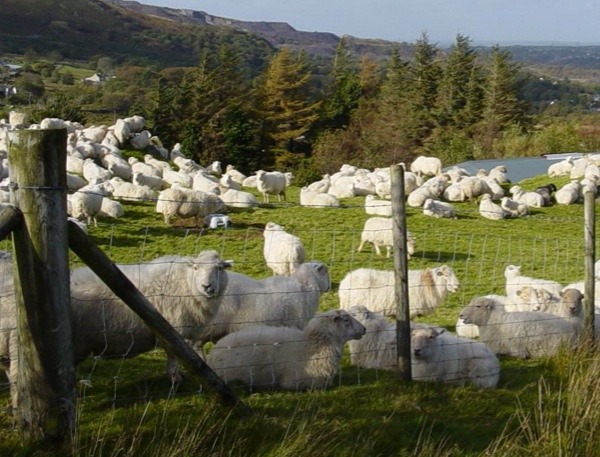
Shepherding in Israel is a wonderful metaphor for of this kind of discipleship. In many countries, sheep spend their lives in fenced-in pastures where they spend most of their time grazing and milling about. Many Christians seem to think that the great commission is a matter of getting sheep “into the pen” —inviting people to accept Christ, the high point of their spiritual lives.
In Israel, however, where grass has difficulty growing in the arid soil, sheep must know their shepherd, following him obediently from pasture to pasture. There, shepherding is a much more active task.
Judith Fain is a Ph.D. candidate at the University of Durham. As part of her studies, she spends several months each year in Israel. One day while walking on a road near Bethlehem, Judith watched as three shepherds converged with their separate flocks of sheep. The three men hailed each other and then stopped to talk. While they were conversing, their sheep intermingled, melting into one big flock.
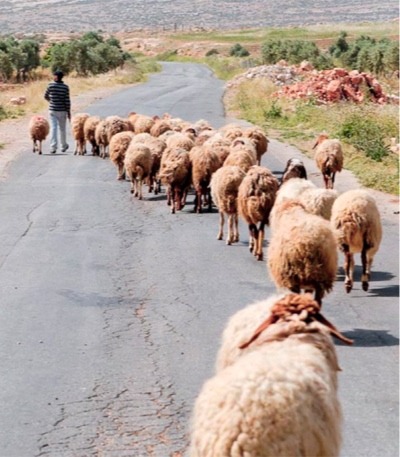
Wondering how the three shepherds would ever be able to identify their own sheep, Judith waited until the men were ready to say their goodbyes. She watched, fascinated, as each of the shepherds called out to his sheep. At the sound of their shepherd’s voice, like magic, the sheep separated again into three flocks. Apparently some things in Israel haven’t changed for thousands of years.
Just like these sheep, what distinguishes us is not so much the “pen” we inhabit, but the shepherd we follow. Some sheep come running as soon as their shepherd calls, but some struggle to obey his lead, going astray whenever temptation strikes. It takes a lot more energy to follow a wandering shepherd than to be cooped up in a pen!
But we are called to be disciples of a Rabbi who is always on the move, one who wants us to go with him, making disciples to the ends of the earth. We need to learn how to recognize his voice, to go where he wants us to go, and to serve and imitate him so that we can share his good news with the world.
…
Many of us see disciple-making as something that only happens at the “fence.” We view our primary job as getting people into the fold. But a lot of sheep are inside the fence, but just milling about munching on grass. They need to be brought closer to Christ by becoming his true disciples.
And what about people who aren’t at all interested in Jesus, or those who are downright angry or hostile toward the church? How are we supposed to relate to them? Perhaps the solution is to live transparently around everyone regardless of their faith or lack of it. We can share openly and sensitively about our own struggles and what Christ is doing in our lives without worrying so much about where people are, relative to the “fence.” Then every bit of our lives will become a source of witness, no matter who our friends are.
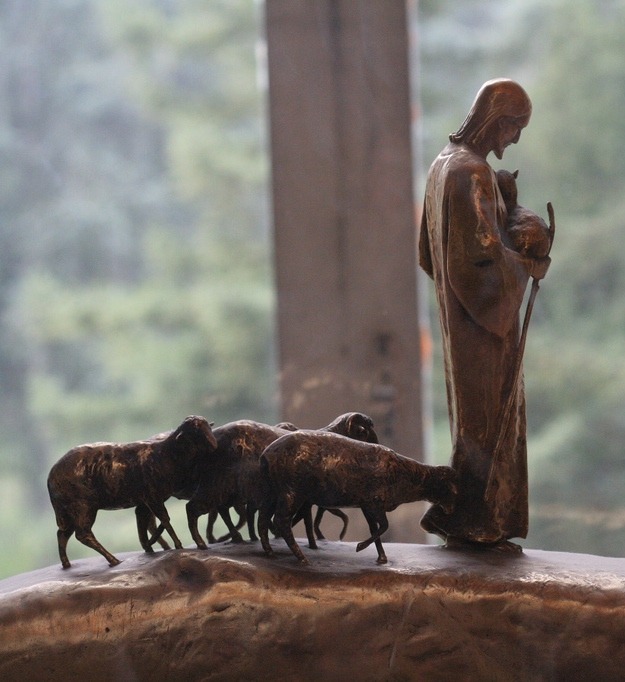
Sometimes we’ll open the gate and let someone in. But just as often we may find ourselves helping other believers become more effective disciples. In the process, we will discover ourselves being discipled as well. The key is to stay close to Jesus, living transparently as we seek to follow our rabbi.
– A couple favorite excerpts from Sitting at the Feet of Rabbi Jesus (Zondervan, 2009)
Wonderful!!!
Great website!! I will recommend to others for sure!
Great thoughts.
Leehee, it’s been a long time since I took Greek class with you in Israel! Hope your studies and ministry are going well.
I really enjoyed the part about information vs. transformation. Its amazing how we can just focus on the information given to us in the Bible and not let it change the way we live. I also really found the idea of transparency quite challenging, I have always heard it but when in the context of discipleship it means something completely different.
This is Great. God doesn’t want us to keep everything to ourselves. He wants us to be transparent with each other. How hard is that?! If we all lived like that the world would be a much different place. I loved when you said “what distinguishes us is not so much the “pen” we inhabit, but the shepherd we follow.” It makes so much sense to do. But can we commit to following Christ in all parts of our lives? I tend to compartmentalize everything in my life. I want to be more open.
This article is great and really shows how God has put such a great picture in an animal that may seem so insignificant. Living transparently around everyone is so important and it is amazing how it changes people around you. They see the truth of your life and truth has the power to change.
I love the idea of connecting our faith to sheep knowing the voice of their shepherd and following him. In the short story, it was amazing how well the sheep knew their shepherds voice and I think that we should be able to reach the point where we are so sure who we are following and who we are living for, Jesus. Trying to live “transparent” can be quite difficult and it is a great “invitation for change” as Dan Walcott would say.
I have never thought about the concept about getting people into pastures like what we do with sheep. It really does show how we do not follow the Shepherd in the right way. We need to be following the Shepherd the way sheep follow shepherd from the east. The Shepherd (Jesus) knows whats best for his sheep (you and me) if we do not follow we can fall into many dangers.
This article gave great insight on the different views of what discipleship is. Traditionally we think of making disciples of Jesus as teaching people certain beliefs about God and helping them to accept Jesus, and later on learn more about the truth we have come to follow. An eastern view is the understanding that Jesus died for our sins and that belonging to him involves repenting/receiving him as our Lord and Savior. Along with that is the realization that Jesus lived transparently in front of his disciples in order to teach them how to live, and we, in return, are to live transparently before others, humbly teaching them the way of Christ. I really resonate with this because I think it is important to be honest with others about our imperfections as Christians, and to be humble when we teach others about Christianity because we are not all-knowing people. We just have the blessing of hearing about an ultimate truth that leads our way of life. Another great concept from the article is that discipleship involves not only information, but transformation. Not only does God want us to know the right things and believe in him, but also to transform the world with Christ and his brightness to be shone without. I also loved the concept about the fence. Letting people into the fence then they are all the sudden okay and perfect with the concepts of Christianity, but the reality is, like sheep, we can still stray away. I think that everyone needs guidance from others and a wiser mentor to help through the journeys of faith and learning how to live the right way for Jesus. Ultimately this is what discipleship is.
The part where discipleship and sharing only happens at the fence caught my attention. To me, this is like inviting someone somewhere to an event, and then once they’re there just let them fend for themselves. We need to plant the seed, and then keep taking care of it and try to watch it to grow.
Also, We say Jesus is our shepherd, but there are so many shepherds people like to follow, Celebrities or athletes are two examples. We as christ followers need to know the voice of God and follow his commands so we don’t become lost and end up where we are not suppose to be.
I agree with this article when it come to information vs. transformation. In western culture, we often view our relationship with God as gaining as much information as possible, but sometimes we forget to apply what we’ve learned to our lives. This article was a good reminder that I need to be transformed in order to be more Christ-like and follow Him.
I agree, being in a gated area vs. following a Shepard are much different. Sure you can learn things and know that there is a person over watch of you inside the fence. But when you actually have to submit to a Shepard (Jesus) your life is totally dependent on him. It makes you want to be near him and you put all your trust in the Shepard. I just love how this puts things into perspective and makes me change how I think about following Jesus.
I love the metaphor about the sheep and the shepherd. About how our only job is not just to get sheep “into the pen” but to be actively be following our shepherd, our rabbi, Jesus. We can’t just give people a ton of information about Jesus and the Bible and God’s love, we have to set an example of Christ’s love through our own lives by following him and his example. I really liked the phrase, “not just information but transformation”. This way we will not be in a world where people know the right things, but in a world where people are showing the love of Christ through their lives. I also liked the part about knowing the shepherds voice. I need to be able to 1. realize when Jesus is calling me to something but also 2. actually obey his calling and follow him to whatever he is going to lead me too.
I really like the comparison between the sheep in the pen and the sheep who follow their leader. They know the voice of their master and trust that their masters path is safe. We cannot just be “safe” Christians living in a pen. We have to be disciples of Jesus and follow him and get out of our comfort zone. He knows what is best for us.
This is so true. To often in American “Christianity” it is about just the information and not the transformation. This is precisely why Christianity gets such a reputation of being hypocritical because we seek to know what Jesus said and don’t seek to be as Jesus was. I really love the Shepard and pen metaphor it really explains this point well.
I like how you compared information and transformation as two separate things in aspect to our faith. I thought it was interesting how you explained information as the forcing of the right beliefs on others while transformation was explained as us as individuals changing in order to act more like Jesus, our shepherd. Yes we can learn every fact about and in the Bible but words without actions is hypocritical. Being right is not always the most important thing.
I love your thoughts! As a high school student, I feel like I don’t understand how to listen to God and make disciples, but you make it so much clearer. We need to be like Christ and love others in order to show God’s love. This is a great challenge for me, because I often don’t think that being transparent and being like Jesus is a way we can help make disciples. I need to work on being transparent and showing people the real me, my struggles and all. I also need to work on showing Christ’s love to everyone and showing who Christ is by being more like Christ. Thanks again for this wonderful article!
I really liked what you said about how the sheep know their shepherd so well that they will turn their heads just at the sound of his voice. They feel safe with this shepherd because they know that he knows what is best for him. This can be hard for us when following Jesus because we tend to have a lot of things that get in the way, when really we should follow closer during those times and listen to him more.
This is really an amazing view of how people should follow Christ. Especially when he told us about the woman who watched the 3 herds of sheep come into one when the 3 shepherds where talking, but then once they where done talking the sheep went back to their shepherds and went on their way. Sometimes I find it if we get caught up in what we are doing its hard to just turn back to the good ways and follow God. But that was an awesome demonstration of when even though we might be mingled with other people from other groups we should still be able to turn back to the ways that we where before. But, we have to be willing to invite and lead others toward Christ. Like it said in the post, we have to open up the gates of Heaven and let others know about how good an miraculas God really is. Overall, this was an awesome post.
I like how you said that is more than just inviting people to Christ but instead you have to follow Jesus like a sheep follows the shepherd. It was good to think about how the Sheep where able to follow their shepherd by just the sound of his voice. I think that we all need to be able to follow God whenever he calls us.
I liked what you said about how the sheep know the voice of the shepherd so when the shepherd calls they know its time to get going. Also when the shepherd guides them and tells them where to go. And I feel that this is hard for us Christians because we follow God and when he tells us to go somewhere that we don’t like we just have to trust him. And know that his decision is the right one. Just like the sheep trust the shepherd to know the safest way.
I found it fascinating to realize that we often times like to try to push people in the pen and keep them there like we are the shepherds. In reality, Jesus wants us to follow him where ever he leads. Being in a pen is a lot safer than being out in the world with all kinds of temptations, but if we follow our shepherd we can come to much greater things. Living transparently can be hard because we all fall short but this is the best way for others to see what being a disciple is all about.
I really enjoyed the statement you made about how shepherding is a metaphor for transformation-discipleship. Knowing the context and geographical elements of the Bible really help us to grow in our own faith and learn more about the Bible. The necessity for sheep to know their shepherd is very applicable to the fact that we, as disciples of Christ, need to know and follow Our Shepherd, Jesus. There may constantly be things around us, trying to get us to go a different way, but if we know our Shepherd’s voice, we’ll stay on the right path. In addition, the path our Shepherd leads us down may not always be the easiest or most comfortable, but since Jesus is the Good Shepherd, He always takes care of us. Knowing this truth also brings out life in Psalm 23, about how the Shepherd leads us.
I really liked how this is comparing following Jesus to sheep following their shepherd. This picture shows me how we should be following Jesus. I love how the sheep immediately follow their shepherd at the sound of of their voice. We often do wander off and don’t listen to Jesus’ call to follow Him. It shows how we should be following Jesus and not wander even though it may be hard at times. I liked how it talks about that the approach doesn’t just involve information but also transformation. This is a challenge for us to live transparently in front of others even though it may be hard. We should live by showing trying to show Christ’s love through us.
I find that the article contains a lot of truth. Christian often forget about the importance of the shepherd and focus on the pen. We think discipleship is about teaching people about Jesus and opening the pen for them. But in reality, its more than that. As the article puts it, “what distinguishes is us is not so much the “pen” we inhabit, but the shepherd we follow.” Its very important for us to remember that discipleship is following our Shepherd and being transparent like him.
The story of the three shepherds amazed me and is an image that is sticking with me. Each sheep really had to know their shepherd’s voice and they followed him with such faith. It strikes me to think that our western culture has put the idea of discipleship into a fence when in reality we have to struggle against temptations to follow our shepherd every day, it is not just “getting into the pen”. God doesn’t promise us that when we choose to follow him, every grassland will be green and we will be safely fenced in. The life of a true disciple is much harder requiring us to have faith in where God is taking us.Thank you for the great imagery and knowledge of learning from the sheep.
I liked it when you said that the sheep recognized their shepherds voice. This is hard for us sometimes because we have so many distractions in our life, we don’t always want to listen to God. But, we need to learn to go where he wants us to go, and listen to Him even when we think we know what is right. The key is to stay close to Jesus, like the sheep stayed close to their shepherd.
I really like this article. It’s amazing how sheep knows there shepherds voice the minute they hear it. I like the comparison you made to us here, and how we are the sheep. And the metaphor you made about the shepherd and pen. I must admit, I have been like the Western people because I try to learn as much information as I can. That’s not necessarily a bad thing but it’s not exactly what God wants. It gets me thinking when you wrote “This approach involves not just information but transformation.” Another thing that struck me was when you talked about God’s goal and said this “fill the world with people who shine with the brilliance of Christ.” That is stated in such a good way, and it really helps me picture what the world would be like if every person in the world lived like that.
The transformation and information piece of this article is something I really agree with. As westernized Christians, we can get lost in trying to figure out all the information and we may believe that knowing everything can solve all the problems and help us become better Christians. However, if we live more transformed, it shows how we love Christ and want to live like Him rather than just showing that we know information. This way, we may know the information, but also act on it. Another thing that really stuck out to me is how important it is to know the voice of our Rabbi and to follow Him. When we put our trust in Him, listen to His voice alone, we are lead to the best things in life. At times, they may seem difficult. Like if a shepherd leads sheep through some rocky, steep terrain. But, on the other side is an abundance of green grass and fresh water. We have to be able to trust God even during the rocky terrain to know He is leading us to a place we need.
I loved the story of the three shepherds. I spoke to me how I must be hearing (meaning also doing) what the Great Shepherd says.
Something that caught my eye was how western culture approaches the gospel primarily for information. Western culture tries to impose their views and beliefs onto other people. To me it’s not a very attractive way to get people to follow Christ. However, I really liked what the article had to say about eastern culture, and the shift from information to transformation. So many get caught up with the actual context from the Bible that they don’t get the true meaning of living for Christ. Christians should take action in more of an eastern culture sense.
Like you said, viewing discipleship from an Eastern perspective goes against the Western culture. We emphasize preaching and debating to convince others to become Christian, but we don’t live transparently. The information versus transformation point is key if we want to become like Jesus and “shine with the brilliance of Christ.” Also, the fence concept is important. We are all sinners and we can all stray. That’s why shepherding is a better example of what discipleship looks like. Jesus’ disciples strayed, and each and every Christian has strayed. We are flawed and imperfect, and we need a shepherd that lives transparently. From him, we can learn.
This whole article is a great reminder for us to become like Jesus. I loved how you noted that we should take Christ’s example and live transparently in order to humbly teach others His way. The metaphor about shepherding is a perfect picture of discipleship. Shepherding is not just putting the sheep in the fence, there’s much more work to it. It’s important that the sheep follow the correct shepherd. We can learn to follow Jesus, the true shepherd, and hopefully others will learn from us. The whole article is a reminder to live our lives as good examples for others. We shouldn’t put on a show that we are perfect but instead be honest. It’s also important to look at fellow believers right next to us. They might be struggling to have a good relationship with the shepherd. Thank you for your wonderful thoughts!
I really liked this article and how it connected our faith to sheep following the voice of their shepherd. It’s so amazing how the sheep knew their shepherd’s voice and followed him even when they met up with two different shepherd’s groups of sheep. We should be listening for God’s voice in our lives and following after Him. By recognizing and following God’s voice, we will go where he wants us to go and be able to serve and imitate him. As westerners, we often approach the gospel as information and then try to throw our belief system at others. We try to put people in pastures like we do with sheep. But, our goal isn’t to get people into the pen, it’s to bring them to follow Christ and become his disciples. We need to live transparently in front of others, despite this being a challenge. We can do this by showing Christ’s love to others through our lives.
I found it interesting the way this article contrasted western thinking versus eastern thinking. Westerners see the Bible as information to absorb, but we don’t always live it out or “walk as Jesus walked”. Many times we do see Christianity as getting people into the pen when really it is a journey. We need to see that it isn’t about pushing Christianity on people, but just living a Christ-like life that influences other people. This article is just a great reminder to walk like Jesus and not try to get people in the pen. I really enjoyed reading it.
I found this article to be interesting. I agree that christians often try to force their religion and beliefs down other people’s throats, and if people don’t believe in it then anything else is wrong. I believe it’s important for christians to understand, as it’s somewhat stated in the last couple paragraphs, that not everyone believes what they do and connecting with others doesn’t always have to involve forcing christianity into everything.
It was interesting how this article compared eastern and western thinking. Easterners are much quicker to act it all out, where as western won’t. It also challenged us to act it out in our own life. A lot of the time we try and force it to other people but for a lot of people that style scares them.
I think it is amazing how the sheep each know and follow their master’s voice. In our world today that is filled with technology it is rare to hear of a process that has continued to work for thousands of years. Maybe people in our world today have trouble remembering the basic theory of just listening for God’s voice. I think the article brings up a great point about listening for God’s voice and only following Him.
I thought that the comparison to how sheep are kept in other countries versus how they are kept in Israel is a great example of how we need to live. So many people feel that we need to just “stay in our fences.” When the picture that we really need to follow is that of a shepherd in Israel; we need to strive to completely follow our master. I really liked the part about information versus being transparent also. I feel that so many times we care so much about how much we know, whereas what is really important is how we live what we have learned. The information that we know helps us, however what people see the the transparent part; how we live. Knowing more isn’t going to help us show Jesus’ love to others, however, displaying it in our everyday actions will.
I really enjoyed reading this article that you posted! I thought what you had to say about living transparently was really interesting because I never thought about it in that way before. I agree, God doesn’t just want everyone to say that they are a follower and attend church from time to time, He wants us to stand out and be his hands and feet in this broken world. I also think it is amazing how sheep can distinguish their shepherd’s voice from another. This really relates with us as Christians because sometimes we can’t distinguish other voices from God’s voice. It’s important that we make time to really listen to what he has to say to us because He is the leader of our lives.
I love the concept of comparing followers of Christ to a sheep that follows its shepherd. It’s amazing that a sheep only knows it shepherds voice and follows him. We can be compared easily with the sheep by the way we follow our shepherd Jesus. Instead of living in pens where this is no leadership and no one can leave or come in, we can live like a sheep in the pasture where anyone can freely follow Christ.
I think this is a great perspective and metaphor for eastern and western views of Discipleship to Jesus. We, as westerners, do have a goal of getting people “in the fence,” so to speak. Although this is done with good intentions, it seems to be the wrong approach. I recognize this attitude in my church and Christian organizations sometimes. Although this is done by well-meaning Christians, it is probably the wrong response to Jesus’ call to make disciples. This article really makes me think, and it puts the pressure off me too I think. I don’t have to go out and try to give a life-altering conversion speech to convince a nonbeliever to follow Jesus, but can live my life in Christ for Christ – and He will do the rest. Thanks for your insights!
This is a fascinating way to look at how to truly bring the kingdom of heaven to earth. Too often, like this article states, westerners try to get others into the “fence”, but really just being stuck in the fence doesn’t do any good. We need to leave the fence and go find other sheep. Whether they are like us or not, we are called to live amongst them in hopes to show them the message of Christ through our daily living. By going to the fence, I believe we can be damaging the mission and purpose of the church. If it is all about the destination and no journey, then why are we doing what we are doing in this world? Westerners like myself need to change our mindset a bit as we might be doing more harm than good if we are strictly looking to bring people to the “Fence”.
This is a great article. I love how it says that we need to be actively following out shepherd, our rabbi, Jesus. As westerners though we tend to fall more towards wanting to know what Jesus said. What we actually need to seek to be how he was and spread the word and the love of Christ. We need to live transparently and show others his ways. We need to be able to know the voice of our shepherd and follow him.
This article glows with ancient wisdom. Our technology and other man made structures blind us to natural and supernatural realities. Our Socratic reasoning and skepticism in a world of naturalism work like blinders on a work horse. Good stories like this help take off the blinders and see God’s viewpoint.
Several things jump out at me that have not already been emphasized by all the responders. (Wish there was a “Like” button!) First is that the sheep and Shepherd are both alive. Resurrection truth helps us know that HE is ALIVE and active in all who are indwelt. Living with our Shepherd is not a matter of abstract truth learned from some book as if we were in high school, but of relational truth, two eternal beings (God and Man) alive and interactive in response to each other. The Shepherd turns his head at the BAAA of the sheep. The sheep lift their head at the voice of the Shepherd. Both hear, both see, both respond. Our literacy based Bible study methods learned from secular education do not lead to this interaction, but to dead faith in many cases. This story of 3 shepherds calling out sheep that follow teaches the orality of the call, the loud unique voice of each shepherd is above the ambient noise. I teach all my disciples to read aloud, not silently, if possible. In our gatherings of believers a large part of the meeting is in the oral reading of Scripture while listeners do not look at the words. Literacy processing locks us into a kind of logical activity the world has imposed. Just listening to the Word, to His Story, becomes a whole soul experience in which The Holy Spirit writes on our hearts more directly. This is especially true of the majority of men who are oral/visual learners. “My sheep hear My Voice” is widely thought of as merely internal, but it never was so in the early church. The Apostles, especially John, quoted Jesus, Who saw in the shepherding experience a vivid illustration of the way God speaks and leads. He sums it up with “without Me you can do nothing” and Paul declares “I can do all things through Christ!” What a wonderful life comes to the sheep who hears His voice! This life comes to all who submit as Jesus says He did (John 5) “I do not do anything on My own.” Check it out!