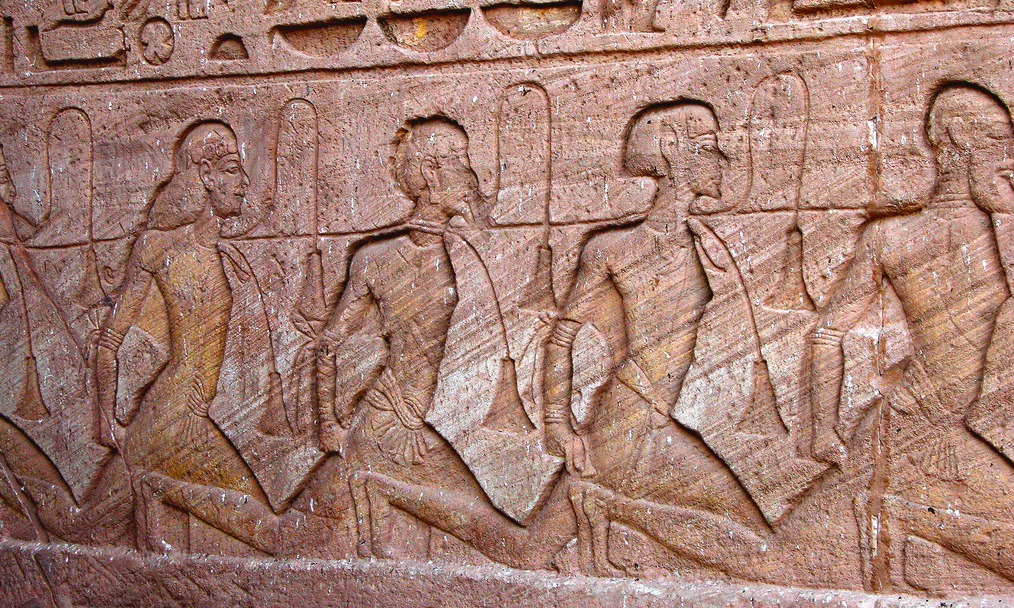
Why didn’t the Bible outlaw slavery? Like war and famine, slavery was a human horror that afflicted cultures throughout all of history. God knew the sinfulness of the human heart, and allowed it, just as he allowed divorce (Matt. 19:8). Making a single law to outlaw slavery was about as reasonable as decreeing that humans […]
“Where Two or Three are Gathered” …in Context

Jesus’ words in light of rabbinic sayings about what happens when people gather to study or pray… God’s Shekinah draws near. Fascinating.
Miracle on the Sea of Galilee

Understanding more about ancient fishing on the Sea of Galilee allows us to paint, in vivid detail, one of the first miracles of Jesus’ ministry.
Psalm 90 Realism for Ash Wednesday and Life

Psalm 90 is an incredibly wise meditation for Ash Wednesday, Lent and all of life. During Lent, Christians meditate on their fragile, short lives. On Ash Wednesday, we put ashes on our head as a visible gesture that reminds us of the dust that we will return to. As humans, we are but dust and […]
Review of “The Bible With and Without Jesus” by Levine & Brettler
Despite some weaknesses, The Bible With and Without Jesus includes a remarkable amount of material about the ways Christians and Jews have interpreted the biblical text.
A Surprising Source of Inspiration for the Sermon on the Mount
Jesus’ greatest sermon has a surprising source of inspiration – the Torah’s laws as they are expressed in Leviticus 19.
The Problem of Psalms of Cursing

One of the most problematic parts of Scripture are psalms which include cursing. Aren’t we taught to pray for our enemies instead?
The Sermon on the Mount is about *Hasidut*

Imagine yourself as a first-century resident of Capernaum. You have heard Jesus speak and seen him heal people, but you have also heard a lot of criticism. Some have accused him of being soft on the law, saying that Jesus is undermining the Torah and leading people astray.
An East to West Misunderstanding: What “Our Children” Means

We live in a Western culture that often doesn’t grasp the implications of the non-Western thinking that goes on Scripture. This past month, I had a real-life example of how a slight difference in definition can cause a huge misunderstanding. If you’ve been reading my blog, you’ve heard about Rev. Dr. Milly Erema Maturu, an […]
Hamas, Ancient Violence, and the Torah’s Radical Response

Life was incredibly cheap in ancient times, and Near Eastern law codes reflected this fact. In Israel, however, murder was seen as an offense against God himself. Many of Israel’s uniquely humanitarian laws were based on the peculiar and supreme value that God placed on human life.
Understanding the Bible’s Non-Western Logic

Modern Bible readers are often frustrated by the fact that the Bible is full of multiple retellings of stories, and they aren’t always in exact agreement with each other. Indeed, from the very first page of Genesis we find that even the creation story itself is told two times, in Genesis 1 and 2. We […]
This Year, Let’s Not Preach about the Fickle Crowds
Dear Pastors (and other friends), could this be the year that we don’t repeat an ugly error? The crowds that shouted “Crucify” at Jesus’ trial were not the same ones that cheered with shouts of “Hosanna” on Palm Sunday. This story has resulted in egregious antisemitism over the centuries, but it can be corrected simply […]
- 1
- 2
- 3
- …
- 11
- Next Page »